How Brooklyn’s Luxury Townhouses Compare To Manhattan’s
June 18, 2026
June 18, 2026
If you are weighing a luxury townhouse in Brooklyn against one in Manhattan, the choice is rarely just about price. You are really deciding how you want to live, how much space you want, and what kind of daily rhythm matters most to you. For many buyers, the best answer comes down to three things: square footage, commute, and address prestige. Let’s dive in.
Brooklyn and Manhattan both sit firmly in the luxury townhouse market, but they do not play at the same level across every submarket. In Manhattan, Brown Harris Stevens reported that all 1 to 3 family townhouses averaged $6,266,277 in the first half of 2025, with a median of $5.5 million and an average of $1,414 per square foot. Sellers also received 93.0% of their last asking price, which points to a market where pricing power still matters.
Brooklyn’s prime townhouse neighborhoods generally come in below Manhattan’s overall average, though they remain highly competitive. In the second half of 2025, the Boerum Hill, Brooklyn Heights, Carroll Gardens, Cobble Hill, and DUMBO group averaged $4,926,489 with a median of $4,287,521 and $1,485 per square foot. Park Slope, South Slope, and Windsor Terrace averaged $3,475,010, while Clinton Hill, Fort Greene, Navy Yard, Prospect Heights, and Vinegar Hill averaged $3,577,867.
The key point is simple: this is not a basic Brooklyn-versus-Manhattan contest. Some Manhattan townhouse areas are far more expensive than others, and some Brooklyn prime districts trade at per-square-foot numbers that overlap with Manhattan. If your budget is around $4 million to $6 million, Brooklyn often places you closer to the center of its prime townhouse market, while Manhattan may require more compromise depending on the submarket.
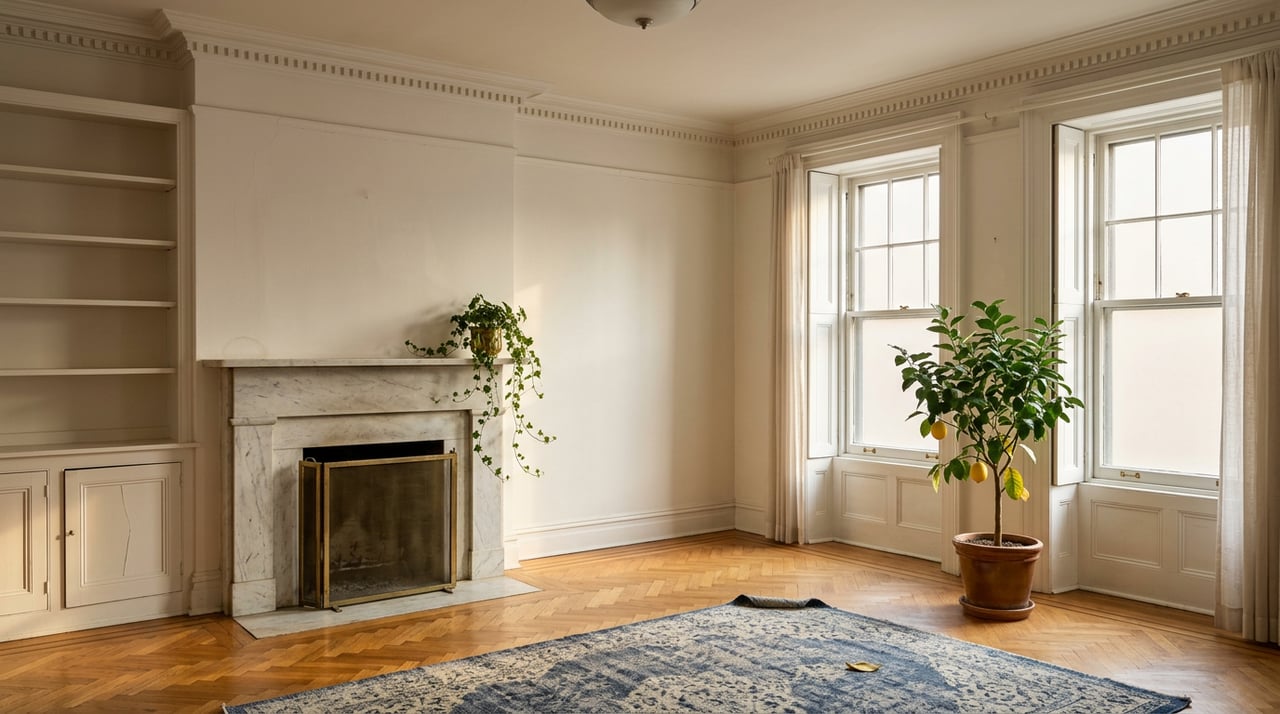
If usable space is high on your list, Brooklyn usually has the advantage at similar price points. The numbers suggest that a budget that opens the door to Brooklyn Heights, Cobble Hill, Carroll Gardens, or Park Slope can often deliver a more expansive home than the same budget in Manhattan’s core townhouse districts.
That does not mean Manhattan is always smaller or always more expensive on a per-square-foot basis. It means the premium in many Manhattan townhouse corridors is tied more closely to location, centrality, and rarity. In Brooklyn, buyers are often paying for a prized brownstone neighborhood while still getting more house for the money.
Manhattan’s townhouse market continues to function as the higher-dollar benchmark overall. Brown Harris Stevens reported 238 townhouse sales in 2025, up 16% from the prior year, with an average price of $7,055,083 and average days on market of 196. That kind of pricing reflects a market shaped by scarcity, established prestige, and a limited number of trophy properties.
The pricing spread within Manhattan also matters. In 2025, the West Side averaged $1,210 per square foot, while Downtown Manhattan reached $2,642 per square foot. That is a reminder that Manhattan is not one single market. If you are targeting a townhouse near the city’s best-known corridors, you are often paying a steep premium for that exact address.
For many buyers, the townhouse decision is emotional as much as financial. Brooklyn is often the space-and-neighborhood play. Manhattan is more often the centrality-and-prestige play.
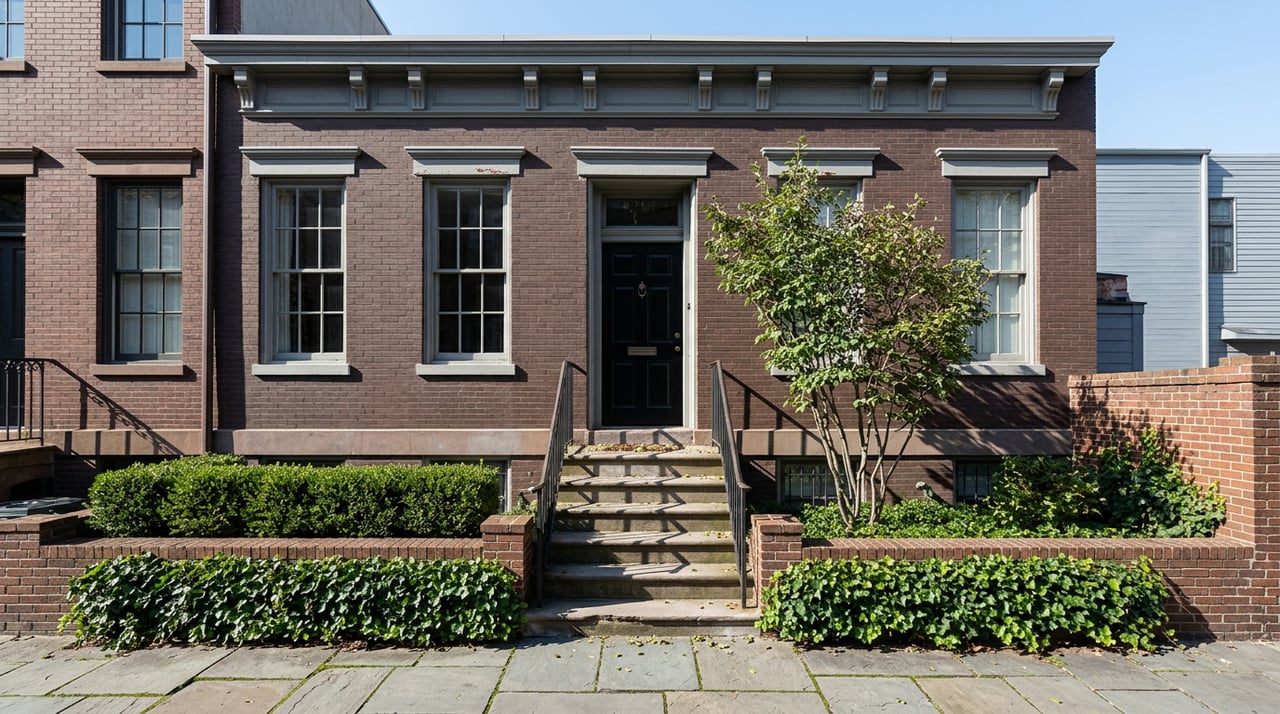
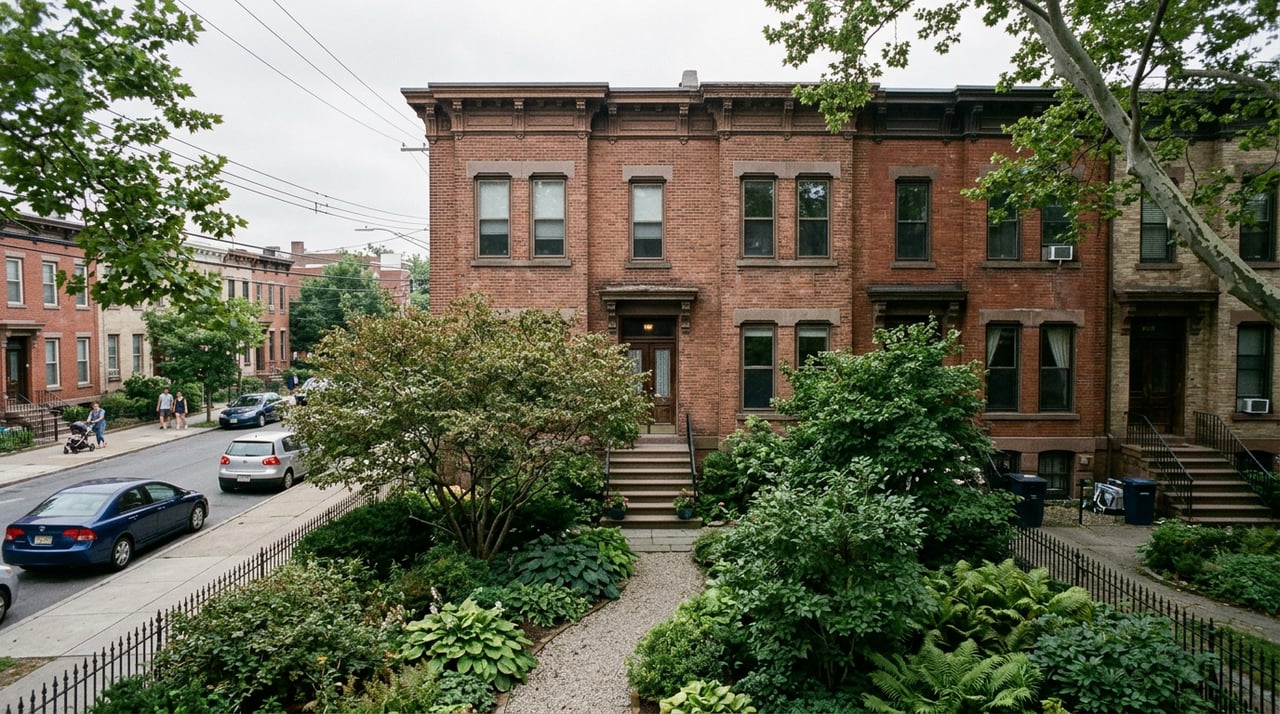
In practical terms, Brooklyn buyers are often drawn to a stronger block-by-block residential feel. Areas like Brooklyn Heights, Carroll Gardens, Cobble Hill, and Park Slope are known for established brownstone streetscapes and a more house-centered experience. Manhattan buyers, by contrast, may prioritize proximity to the city’s business, cultural, and social centers, even if that means less interior volume for the same spend.
Transit access is strong in both boroughs, but the lifestyle trade-off is different. Brooklyn townhouse-heavy areas are served by stations such as Atlantic Av-Barclay Center, Borough Hall, Court St, Clark St, Jay St-MetroTech, Bedford Av, Prospect Park, and Greenpoint Av. Manhattan has dense access around hubs like Grand Central-42 St, Times Sq-42 St, W 4 St-Washington Sq, Wall St, and Union Square.
For many buyers, that means Brooklyn may involve a slightly longer commute in exchange for more residential space and a quieter block-level environment. Manhattan often offers faster access to major business districts and a more immediate connection to the city’s core. If daily travel time is one of your top priorities, Manhattan may justify the premium.
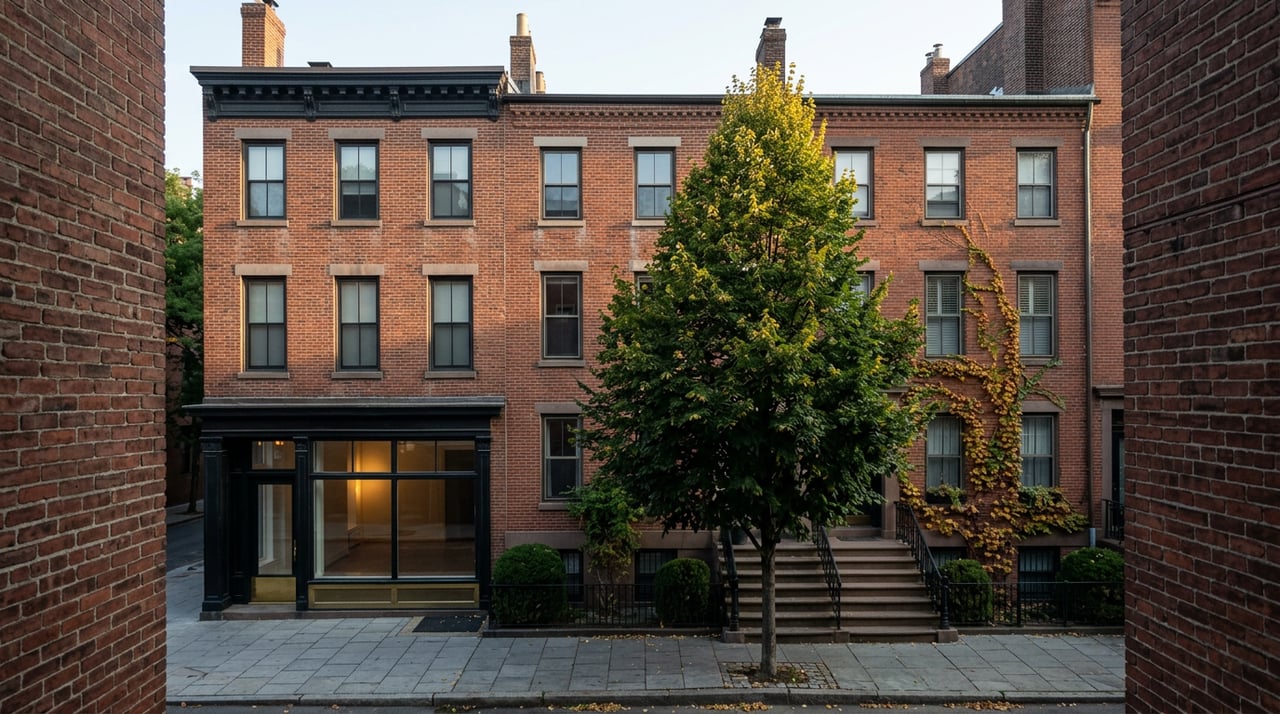
Whether you choose Brooklyn or Manhattan, many luxury townhouses are located in or near historic districts. The New York City Landmarks Preservation Commission states that most exterior changes to buildings in historic districts require review, and owners must obtain LPC permits for most alterations affecting designated properties.
That matters for buyers planning updates or major renovations. In neighborhoods such as Brooklyn Heights, Greenwich Village, and Tribeca, preservation oversight can affect design choices, approval timelines, and project scope. In both boroughs, well-executed existing condition often carries added value because buyers understand the work and coordination that may be required to change a landmarked property.
Brooklyn’s prime townhouse market has continued to show strength in established brownstone neighborhoods. In the second half of 2025, the Brooklyn Heights, Cobble Hill, and Boerum Hill group posted a 5% year-over-year price gain, while the Park Slope group rose 10% year over year.
That does not guarantee future appreciation, but it does show that buyers continued to pay up for well-located townhouses in sought-after Brooklyn districts. For buyers thinking long term, this resilience supports the case for Brooklyn as more than a value alternative. It is its own luxury market with strong neighborhood identity and limited supply.
Manhattan townhouses often move in a more mix-sensitive market. Because the market is relatively small, with just 238 sales in 2025, average prices can shift meaningfully based on where those homes were located and what kinds of properties traded during the year.
That dynamic gives Manhattan a different character from Brooklyn. Rather than functioning as a broader neighborhood market, it can behave more like a trophy market, where a handful of standout properties and elite corridors shape perception as much as the overall averages. If you are buying for prestige, proximity, and enduring address cachet, that may be exactly the appeal.
The better value depends on what you want your townhouse to do for your life.
Brooklyn tends to make the strongest case when you want:
For many buyers, this makes Brooklyn especially compelling when lifestyle at home matters just as much as location in the city.
Manhattan often makes the stronger case when you want:
If convenience and address carry equal or greater weight than square footage, Manhattan may be the better fit.
One of the biggest mistakes buyers make is comparing borough averages too broadly. A townhouse in Brooklyn Heights is not trying to be the same thing as a townhouse in Downtown Manhattan, and a West Side Manhattan property may compare very differently from one in the East Side or Tribeca.
That is why a good search begins with your priorities, not just a headline number. Once you define your target lifestyle, your preferred commute, and your ideal level of space, the right borough often becomes much clearer.
If you are exploring luxury townhouses in Brooklyn or Manhattan, a thoughtful side-by-side review can save time and sharpen your strategy. BARNES New York offers discreet, multilingual guidance for buyers who want local market insight, personalized service, and a refined approach to New York real estate.
Stay up to date on the latest real estate trends.
Experience tailored guidance, global reach, and exclusive access to New York’s most coveted properties. We are your trusted partner in luxury real estate.