Planning A Sag Harbor Home For Seasonal And Year‑Round Use
July 2, 2026
July 2, 2026
Are you picturing long summer weekends by the harbor, or a home that feels just as comfortable in January as it does in July? In Sag Harbor, that distinction matters more than many buyers expect. Your ideal property is not only about style or location, but also about how you plan to live in it throughout the year. If you define that rhythm early, you can make a smarter purchase with fewer surprises later. Let’s dive in.
Sag Harbor is a compact incorporated village in Suffolk County that spans both Southampton Town and East Hampton Town. Village materials describe it as roughly 2.3 square miles with about 3.3 miles of shoreline, and much of the village, including the full business district, is listed on the National Register of Historic Places.
That setting creates a lifestyle that can shift meaningfully by season. The harbor, the historic core, and the village scale all support different ways of living, from summer-focused enjoyment to full-time occupancy. When you plan around your actual use pattern, you can better match the home’s layout, systems, and upkeep needs to your goals.
For buyers who love the waterfront rhythm, the village harbormaster notes that boating season runs from April 1 through October 31. Marina facilities are also a short walk from shops, restaurants, and public bus transportation, which helps explain why Sag Harbor appeals to both seasonal visitors and year-round residents.
Before you compare finishes or outdoor amenities, it helps to decide how often you will use the property. A home for peak summer months can work very differently from one meant for long shoulder seasons or daily year-round living.
A simple way to think about it is this: the more months you plan to use the home, the more important year-round comfort and logistics become. In Sag Harbor, climate, parking, flood considerations, and maintenance can all become more noticeable when the house is not just a summer retreat.
If your plan centers on warm-weather weekends and summer entertaining, you may be comfortable prioritizing outdoor living over heavy infrastructure. In that case, features like easy-clean finishes, guest overflow space, and low-maintenance systems may carry more value for you than winter-focused upgrades.
This approach fits the local seasonal pattern well. Nearby NOAA climate normals for Bridgehampton show a July mean high of 80.6°F and an August mean high of 79.5°F, which supports the appeal of decks, patios, and indoor-outdoor flow during the busiest part of the season.
If you expect to use the property in spring and fall as much as in summer, comfort planning becomes more important. Better insulation, tighter windows, and dependable heating can make a major difference when temperatures shift and dampness becomes more noticeable.
This is where buyers often benefit from looking beyond curb appeal. A home that feels charming in July may need stronger weather protection to stay comfortable during cooler months with more wind, rain, and changing temperatures.
For full-time use, the home needs to function well in every season, not just look good in summer. NOAA’s 1991 to 2020 climate normals for nearby Bridgehampton show a January mean temperature of 30.7°F, annual precipitation of 49.76 inches, and annual snowfall of 26.8 inches.
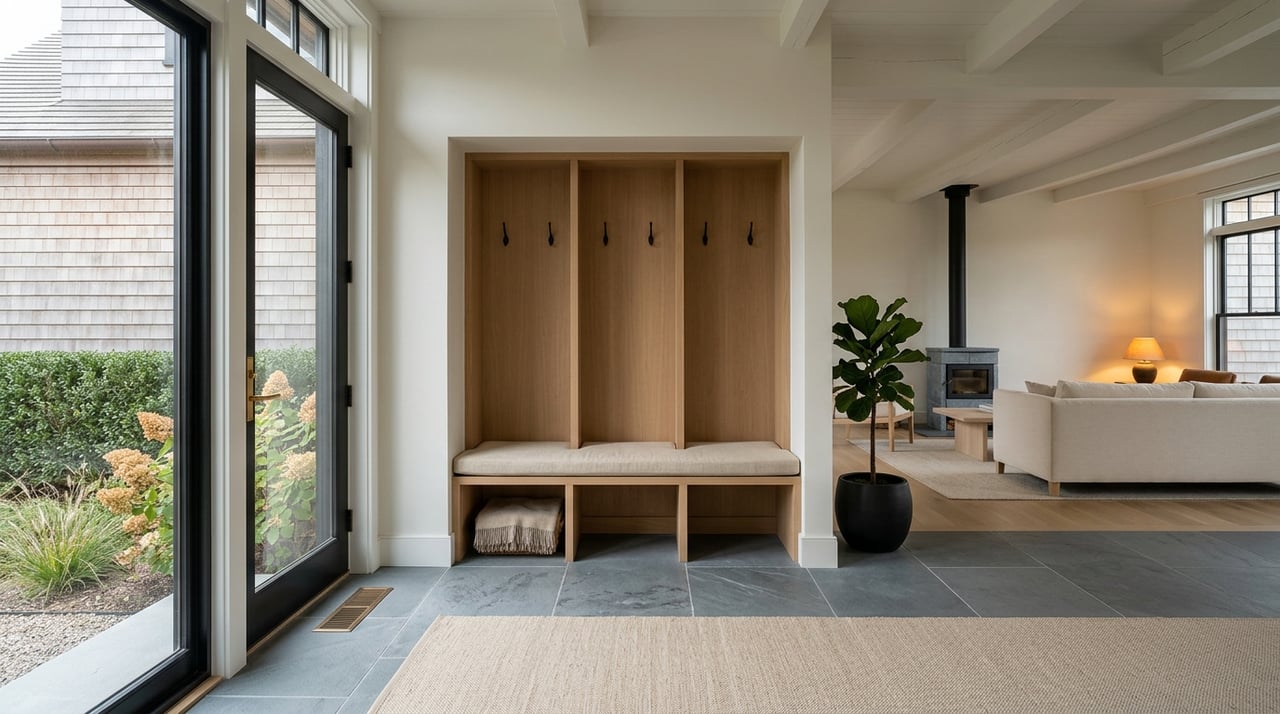
That makes practical features especially important. Full HVAC, insulated plumbing, winter-ready access, gear storage, and a mudroom-style entry can all support more comfortable daily living. If you work remotely, a layout that allows privacy and consistent comfort may also matter more than a purely vacation-oriented floor plan.
In a village as compact as Sag Harbor, small location differences can change the ownership experience. Homes closer to the business district, waterfront, and village center may offer easier access to shops, dining, cultural uses, and the harbor, but often with tradeoffs in space or privacy.
Properties farther from the core may appeal more if you want a quieter residential base or more separation for longer stays. Neither option is inherently better. The key is choosing the setting that matches how you plan to spend your time there.
Village code also reflects the area’s layered land-use structure. Sag Harbor includes several zoning districts and overlays, including residential, business, waterfront, conservation, historic, and tidal flood hazard areas.
This point is especially important in Sag Harbor because the village straddles two towns. A home inside the village boundary may be subject to a different local code or permitting process than a nearby property outside the boundary.
That means you should confirm the exact parcel location early in your search. It is an important step if your plans involve renovation, rental use, or any assumption that village-specific rules apply.
Beautiful coastal living comes with practical responsibilities. In Sag Harbor, climate and shoreline conditions make maintenance planning more important than many buyers initially expect.
If the home will be used beyond summer, look closely at how it handles moisture, temperature changes, and storage. Systems that feel adequate for occasional use may feel less convenient when you rely on the property more frequently.
For full-time or frequent winter use, parking deserves more attention than buyers sometimes give it. The village FAQ states that after more than one inch of snow, vehicles may not be parked on public streets between midnight and 6:30 a.m. under the village snow-parking rule.
That makes off-street parking and snow-removal planning especially relevant for year-round ownership. If you expect winter stays, it is wise to think through access, driveway management, and daily convenience before you commit.
The village’s water-quality program reports nitrogen pollution and fecal coliform concerns, and identifies stormwater and onsite septic systems as sources. For buyers, that means septic condition, drainage, and related maintenance may deserve more scrutiny than in less coastal settings.
This can matter even more if you plan to use the home continuously or rent it for longer periods. Frequent occupancy generally puts more pressure on systems, so it is helpful to understand how the property is designed to handle that use.
If part of your purchase strategy involves rental potential, you should review Sag Harbor’s current local rules with care. The village’s rental registry chapter requires a valid rental occupancy permit before a dwelling can be used as a rental property.
The code also states that no rental permit shall be granted to a non-owner-occupied short-term rental property. It defines a short-term rental as 14 days or less, which is an important distinction for buyers who may be considering weekend-style income.
Sag Harbor’s current framework is more supportive of longer seasonal occupancy than unrestricted short stays. The local rules state that a seasonal rental cannot be less than 30 consecutive days, and that a dwelling rented for more than 120 days in a calendar year does not qualify as a seasonal rental.
In practical terms, you should not assume broad flexibility for nightly or weekly rental turnover. If investment performance is part of your decision, your income model should reflect the village’s actual rules rather than a general Hamptons short-term rental assumption.
In any coastal village, flood considerations can influence both livability and carrying costs. Sag Harbor’s code includes a Tidal Flood Hazard Overlay District, and the village states that relevant special flood hazard areas are based on FEMA flood maps.
For buyers, this is not just a paperwork issue. Flood zone status can affect insurance planning, resilience priorities, and whether a property feels suitable for your intended pattern of use, especially if you are considering year-round occupancy or rental activity.
If you want to simplify your decision-making, start by ranking your priorities in order. This often helps separate what feels attractive during a showing from what will support ownership over time.
Consider focusing on these questions:
The answers can shape your search more effectively than style preferences alone. In a market like Sag Harbor, clarity about use often leads to better long-term satisfaction.
Sag Harbor can offer a rare balance of coastal charm, historic character, and practical year-round appeal. The key is making sure the property supports the life you actually want to live there, whether that means summer entertaining, shoulder-season escapes, or a full-time base with lasting comfort and resilience.
For discreet guidance tailored to your lifestyle, investment goals, and ownership plans, schedule a private consultation with BARNES New York.
Stay up to date on the latest real estate trends.
Experience tailored guidance, global reach, and exclusive access to New York’s most coveted properties. We are your trusted partner in luxury real estate.